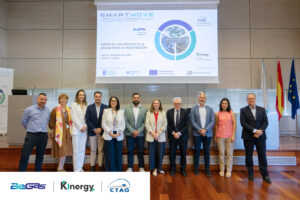

Cepsa and BeGas have joined forces to decarbonise urban professional transport. Bioautogas is a renewable fuel that reduces CO2 and particulate matter emissions by up to 90%. This alliance seeks to unite all those involved in the professional transport sector (engine manufacturers, vehicle manufacturers, energy producers and consumers) in order to combat climate change.
Cepsa and BeGas have joined forces to decarbonise urban professional transport. Bioautogas is a renewable fuel that reduces CO2 and particulate matter emissions by up to 90%.
Cepsa, an energy company dedicated to sustainable mobility, and BeGas, a European producer of alternative energy engines, have formed an alliance to promote the decarbonisation of urban professional transport, such as buses, delivery trucks, rubbish collection trucks and other types of municipal services.
Sustainable transport
This alliance seeks to unite all those involved in the professional transport sector (engine manufacturers, vehicle manufacturers, energy producers and consumers) in order to combat climate change. This will be achieved by reducing the carbon footprint of the sector and decreasing pollution in cities. Heavy urban vehicles represent 10% of the total fuel consumption of this fleet.
So far, nine partners from the public and private sectors have joined this alliance: Mobility Bus, Herko, Buxo Trucks, Socage, Aebi Schmidt Ibérica and Revenant (vehicle and machinery manufacturers), Urbaser and Sulo (with vehicles of this type in their fleets) and ANEPMA (National Association of Public Environmental Companies).
Pedro Silva, CEO of BeGas, has assured that the agreement with Cepsa is a key step towards achieving the 2050 objectives, since internal combustion engines powered by BioAutogas are the strategic response.
Cepsa and BeGas have led an agreement to promote the production and use of bioautogas or biopropane, as well as other renewable products, in professional urban transport. In addition, they will promote the use of engines 100% powered by these energies.
Bioautogas is a renewable gas that reduces CO2 emissions by up to 90%, and also reduces the amount of suspended particles and NOx – responsible for urban pollution – by more than 90% compared to traditional fossil fuels. This, in addition to reducing noise pollution, makes it possible for vehicles to meet the requirements of the 2050 agenda.
Cepsa and BeGas have decided to join forces to contribute to the decarbonisation of transport. This alliance reflects the commitment of both companies to reduce emissions in heavy urban vehicles. Cepsa is currently capable of producing 7,000 tonnes of biopropane per year in its industrial facilities. As part of their Positive Motion strategy, they aim to produce more than 100,000 tonnes of this sustainable fuel annually by 2030. In addition, they aim to become leaders in the production of advanced biofuels in Spain and Portugal with an annual production of 2.5 million tonnes by the end of this decade.
BeGas Motor is a leading European company in the creation and production of engines powered by alternative energies, such as autogas or bioautogas. In addition, it is the only manufacturer of 100% gas engines – without the need to mix it with diesel or petrol – for trucks and urban buses that has Euro VI Step E approval.